Di era komputasi berdensitas tinggi, sistem pendingin udara tradisional dengan cepat digantikan oleh arsitektur pendingin cair canggih. Inti dari transformasi ini terletak pada unit distribusi pendingin pusat data (CDU)—komponen sistem penting yang bertanggung jawab atas pengiriman dan pengaturan pendingin secara tepat di seluruh infrastruktur server.
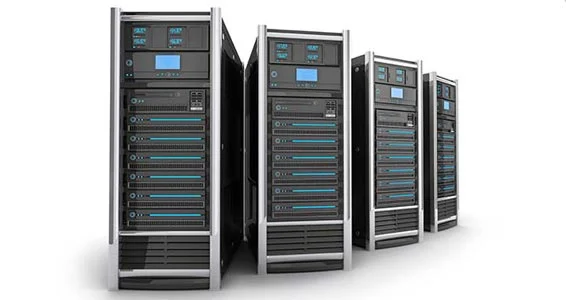
Definisi: Apa itu unit distribusi pendingin pusat data (CDU)?
Unit distribusi pendingin (CDU) adalah perangkat distribusi pusat di pusat data berpendingin cairan, yang menyalurkan cairan pendingin—baik air atau cairan berfluorinasi—ke pelat pendingin, tangki pendingin imersi, atau blok air langsung ke chip. CDU memastikan pembuangan panas yang tepat sasaran pada tingkat chip atau tingkat rak, meningkatkan efisiensi termal dan keandalan di seluruh pusat data modern.
fungsi-fungsi utama sistem CDU
Distribusi cairan pendingin: mengontrol aliran menggunakan pompa dan katup untuk memastikan pendinginan yang seimbang untuk setiap server.
Kontrol suhu & tekanan: menjaga suhu cairan pendingin dalam rentang toleransi yang ketat (±0,5°C) dan memastikan tekanan stabil untuk mencegah kavitasi atau kebocoran.
Desain redundansi: menggunakan konfigurasi pompa ganda dan daya ganda untuk memastikan ketersediaan 99,999%.
Pemantauan waktu nyata: terintegrasi dengan sistem DCIM untuk memberikan umpan balik langsung tentang laju aliran, suhu, dan status kebocoran.
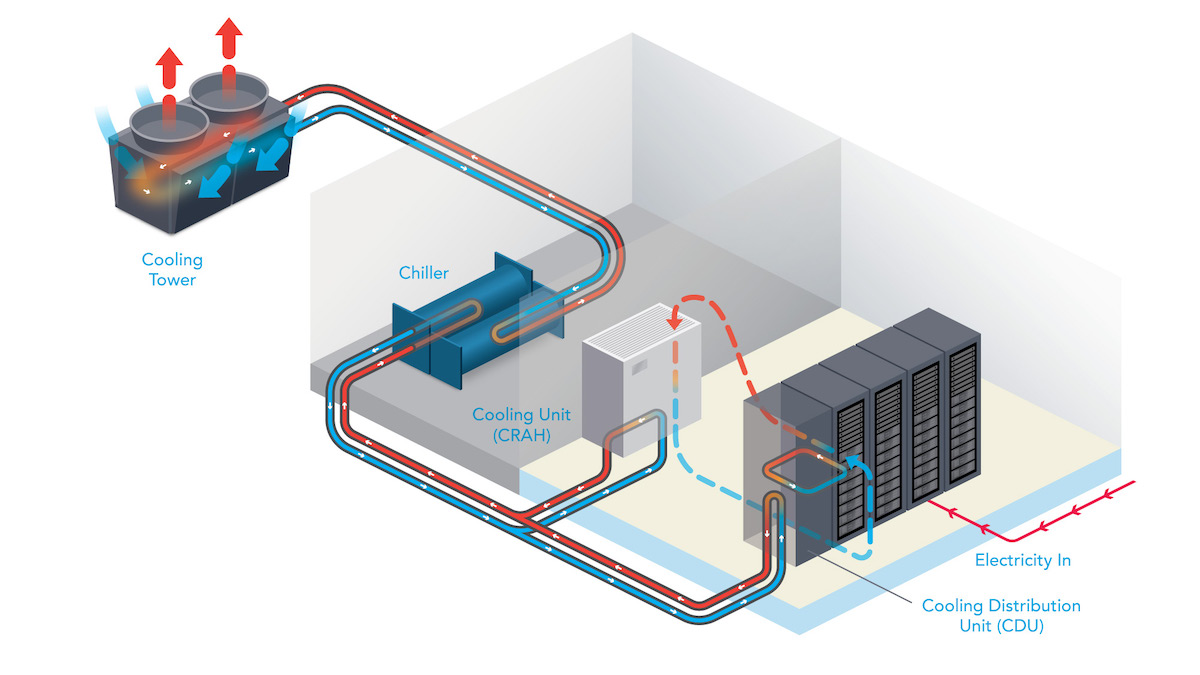
jenis-jenis unit distribusi pendingin pusat data
CDU tingkat rak: dirancang untuk penggunaan kabinet tunggal, mendukung kapasitas pendinginan 30-100 kW. Ideal untuk penerapan yang skalabel dan fleksibel.
CDU tingkat baris: melayani seluruh baris rak server dengan dukungan daya hingga 500 kW, ideal untuk klaster komputasi dengan kepadatan tinggi.
Immersion CDU: dirancang khusus untuk sistem pendinginan imersi satu fasa atau dua fasa, kompatibel dengan cairan berfluorinasi seperti 3M Novec.
Keunggulan sistem pendingin cair CDU
mencapai efisiensi penggunaan daya (pue) serendah 1,05, menghemat energi 30%+ dibandingkan pendinginan udara.
mendukung beban kerja dengan kepadatan sangat tinggi (misalnya, 50 kW+ per rak untuk server AI atau GPU).
beroperasi senyap dengan desain CDU tanpa kipas (<50db noise level).
application scenarios
supercomputing facilities (e.g., japan's fugaku)
ai training clusters (e.g., nvidia dgx a100)
edge data centers with compact cdu footprints
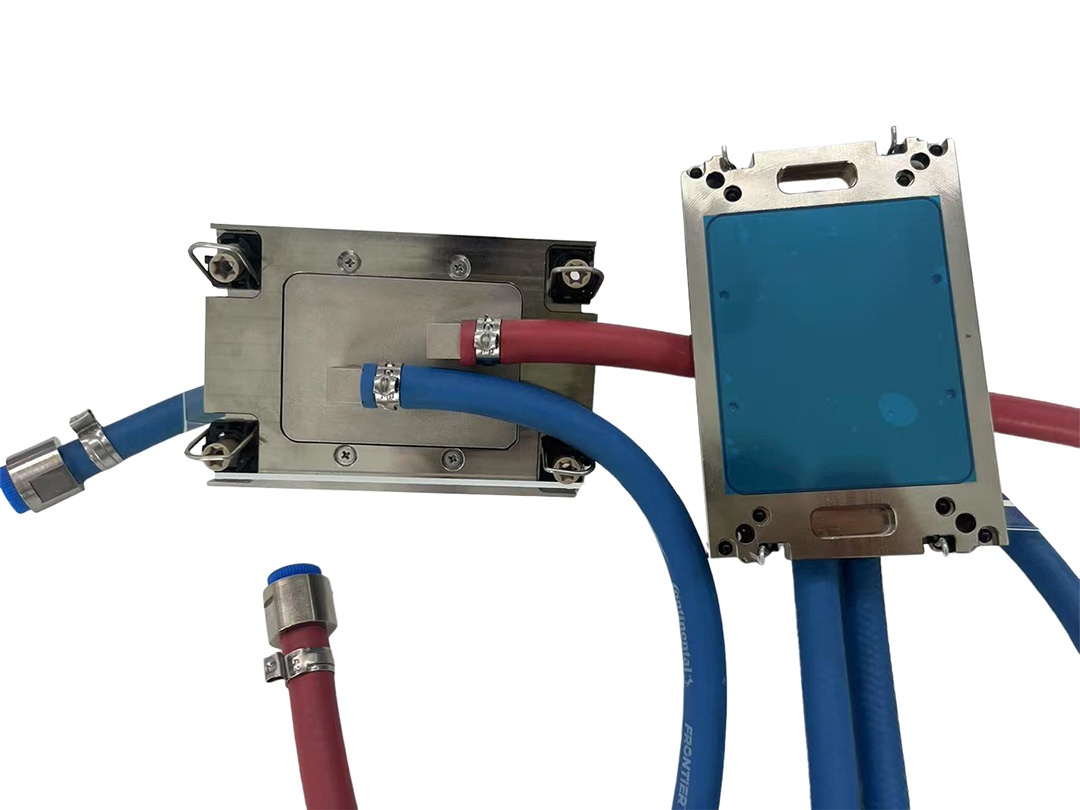
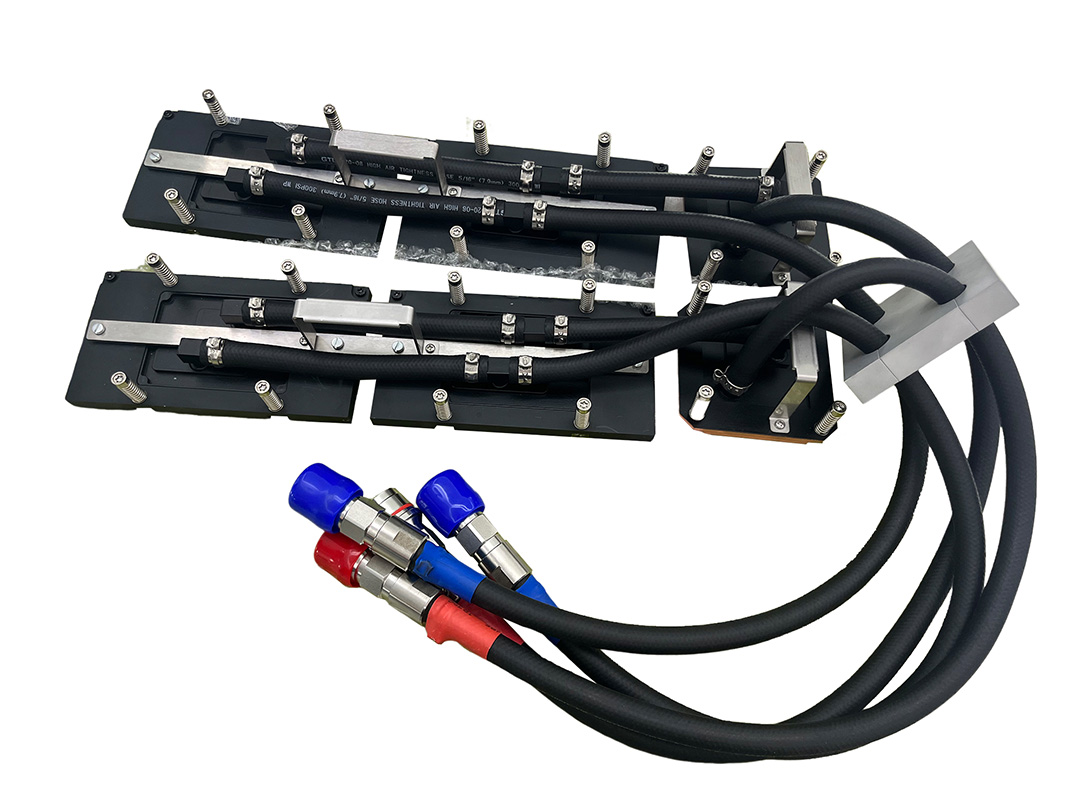
cold plates, heat sinks, and water blocks: the execution layer of cdu cooling
while the cdu serves as the command center for liquid flow, its true cooling potential is realized through its terminal components: cdu water-cooled cold plates, heat sinks, and water blocks. these components directly interface with heat-generating devices to execute efficient thermal transfer.
| component | cdu system role | application |
|---|
| cold plate | transfers coolant to chips via microchannels for precise heat removal | gpu/cpu-intensive racks, ai compute nodes |
| heat sink | provides secondary cooling to cdu's internal electronics | cdu control cabinet (pumps, psu modules) |
| water block | customized cooling of irregular thermal sources; connects with cdu pipes | hpc systems, supercomputing accelerators |
technical advantages vs. traditional air cooling
1. cold plates (cdu water plates)
extreme heat flux capacity: supports up to 500–1000w/cm², outperforming air cooling (50–100w/cm²).
surface uniformity: delivers thermal spread with <2°c delta across the plate, preventing local overheating.
smart cdu integration: built-in sensors feed real-time data to cdu controllers, enabling dynamic flow and temperature regulation.
2. heat sinks for cdu internal components
cdu self-cooling: ensures cdu reliability by passively cooling key electronics.
lightweight design: aluminum 6063 construction minimizes weight, ideal for rack-mount cdu units.
3. custom water blocks (cdu water block solutions)
complex shape compatibility: cnc or 3d-printed to match non-standard chip designs (e.g., nvidia h100).
low flow resistance: engineered water channels reduce cdu pump workload (pressure drop < 0.3 bar).
cdu-component synergy: smart thermal management
modern cdu liquid cooling systems are not standalone—they function in harmony with cold plates, heat sinks, and water blocks to form a dynamic, closed-loop thermal architecture. key highlights include:
dynamic flow tuning: cdu adjusts coolant delivery based on feedback from water plates or water blocks (e.g., via intel dcm protocol).
leak protection: quick-disconnect fittings (e.g., cpc, qd) on water blocks and cdu hoses ensure sealed, safe connections.
energy efficiency: combined cdu + cold plate architecture can achieve pue as low as 1.05, compared to 1.5+ for traditional systems.
real-world applications
google data center: utilizes cdus to distribute chilled water to rack-mounted water plates for tpu cooling.
tesla dojo supercomputer: employs cdu-integrated custom water blocks to manage 1mw per cabinet.
crypto mining farms: use aluminum cold plates + cdu instead of fans, reducing power consumption by 30%.
future trends in cdu-based cooling solutions
two-phase cdu cooling: uses phase-change fluids like liquid nitrogen to achieve 5x efficiency gains.
ai-driven cdu control: enables predictive adjustments in flow and temperature based on workload forecasting.
as the backbone of next-generation data center infrastructure, the data center cooling distribution unit (cdu)—along with advanced cdu water plates, heat sinks, and liquid cooling water blocks—will continue to evolve toward smarter, quieter, and more efficient thermal management solutions.
keyword summary: data center cooling distribution unit (cdu), cdu water plate, cdu water block, immersion cdu, rack-level cdu, cold plate, heat sink, liquid cooling system, full-chain liquid cooling, water-cooled server, ai liquid cooling.